Engagement Photoshoot Guide for Couples Capture the Perfect Moments
- Raynae Media Blog
- 1 day ago
- 9 min read
An engagement photoshoot should feel like a pause in the middle of a busy season. Wedding plans, family opinions, venue visits, and long to-do lists can make the engagement period feel rushed. A good session brings the focus back to the two people at the center of it.
The best engagement photos rarely happen by accident. They come from a mix of planning, trust, comfort, and a photographer who knows how to guide real moments without making everything feel staged.
This guide walks through how to prepare, what to wear, where to go, how to pose naturally, and what small choices can make the final gallery feel personal.

Start with the feeling you want from the session
Before picking outfits or locations, decide what the photos should feel like. This choice will guide almost everything else.
Some couples want soft and romantic images with golden light, gentle movement, and quiet moments. Others prefer playful photos with laughter, city streets, coffee shops, or a favorite weekend activity. Some want a clean, editorial look with simple backgrounds and polished styling.
A clear mood helps the photographer make better decisions about light, location, posing, and timing.
Ask yourselves a few simple questions:
Do we want the photos to feel cozy, elegant, adventurous, playful, or timeless?
Do we prefer nature, city streets, home, or a meaningful place?
Do we want more candid movement or more polished portraits?
Will these photos be used for save-the-dates, a wedding website, home prints, or all of the above?
There is no right answer. The goal is to make the session reflect your relationship, not copy a trend that does not fit.
If you spend most weekends hiking, a trail or lake may feel natural. If your favorite memories involve late breakfasts and bookstores, a neighborhood session may make more sense. If you love getting dressed up, a formal garden, museum exterior, or classic downtown location might be the right fit.
Choose a location with meaning and good light
A beautiful location helps, but meaning matters more. A plain street can look incredible if it holds a memory and has flattering light. A dramatic overlook can fall flat if it feels disconnected from the couple.
Good engagement photo locations often fall into a few categories.
Personal places
Scenic places
Urban places
Indoor places
A first-date spot, favorite park, home, beach, bookstore, hiking trail, or neighborhood you love.
Gardens, lakes, beaches, mountains, open fields, overlooks, or tree-lined paths.
Downtown streets, historic buildings, murals, cafes, bridges, or quiet corners with texture.
Your home, a rented studio, a greenhouse, a hotel lounge, or a meaningful local spot with permission.
Light matters as much as location. The most flattering outdoor light often happens shortly after sunrise or in the last hour or two before sunset. This is often called golden hour. The light is softer, warmer, and easier on the eyes.
Midday light can work, but it needs shade, reflective surfaces, or a photographer who knows how to manage strong sun. Indoor sessions need window light, warm lamps, or a space that allows flash if needed.
If the location is public, check the rules first. Some parks, museums, gardens, rooftops, and private venues require permits. A photographer may know common rules in the area, but the couple should still confirm access when the place has special restrictions.

Plan outfits that feel like you
Outfits can shape the entire look of the photos. They affect color, movement, comfort, and confidence. The best outfits look polished but still feel natural to wear.
A simple rule works well: choose clothing that fits the setting, flatters movement, and feels like an elevated version of everyday style.
For many couples, two outfits are enough. One can be more casual and personal. The other can be dressier for variety. More than two changes can interrupt the flow, especially during a short session or when changing space is limited.
Pick colors that work together
Matching exactly is not necessary. Coordinating usually looks better.
Soft neutrals, earth tones, muted blues, warm browns, cream, olive, rust, black, and soft pastels photograph well in many settings. Bright neon colors can reflect onto skin and distract from faces. Tiny busy patterns can also create visual noise.
A good approach is to choose one person’s outfit first, then build the other around it.
For example:
A cream dress with tan boots pairs well with a charcoal shirt and dark jeans.
A navy sweater works well with a floral dress that includes small blue details.
Black trousers and a simple top can pair with a textured jacket or earth-toned layers.
Texture adds depth. Linen, denim, knits, cotton, suede, and flowy fabrics can photograph beautifully. A long dress or skirt can add movement in windy locations, while a jacket can make simple outfits look finished.
Dress for comfort and movement
Engagement sessions include walking, sitting, turning, hugging, and sometimes climbing steps or standing on uneven ground. If an outfit feels stiff or needs constant adjusting, that discomfort may show.
Before the session, move around in the clothes. Sit down, walk, lift your arms, and check how the outfit behaves. Shoes matter too. If the location has grass, sand, cobblestones, or trails, bring shoes you can actually walk in. Dress shoes or heels can still work, but it helps to bring a backup pair for moving between spots.
Keep grooming simple and intentional
Hair, makeup, nails, facial hair, and skin prep do not need to be dramatic. They should feel clean and camera-ready.
If hiring a hair or makeup artist, schedule enough buffer time. Rushing before the session can create stress before the first photo. If doing everything yourself, give yourself extra time and bring small touch-up items.
Useful items to pack include:
Lip balm or lipstick
Hairpins or a small brush
A lint roller
Tissues
Water
Comfortable walking shoes
A small towel if the weather is warm
Any meaningful prop, used sparingly
Work with your photographer before the shoot
A great session begins before the camera comes out. Communication helps the photographer understand what matters most.
Share the basics first: location ideas, outfit plans, timing, comfort level, and how you hope to use the photos. If there are certain angles or features you feel sensitive about, say so kindly and clearly. A good photographer will not make it awkward. They will use that information to guide posing in a way that feels better.
Also share any must-have photos. Keep the list short. Engagement sessions flow best when there is room for movement and natural reactions.
Good must-have examples include:
A clean photo for a save-the-date card
A close-up showing the engagement ring
A wide shot with the full location
A few vertical images for frames or a wedding website
A photo with a pet, if included
Too many specific shot requests can make the session feel like a checklist. Trust the photographer’s eye, but speak up about the photos that truly matter.

Learn how natural posing really works
Many couples worry they are awkward in front of the camera. That is completely normal. Most people do not know what to do with their hands, where to look, or how to stand until someone guides them.
The good news is that natural posing usually starts with simple movement, not complicated instructions.
A photographer might ask a couple to walk slowly, bump shoulders, whisper something funny, hold hands, look at each other, or lean in close. Those prompts create real reactions. The photo may look candid, but it often starts with gentle direction.
Use small movements
Small movements make photos feel alive. Instead of standing perfectly still, try:
Walking hand in hand
Brushing hair away from a face
Adjusting a jacket
Leaning into each other
Sitting close and looking in different directions
Dancing slowly for a few seconds
Holding each other while looking at the scenery
These movements give the photographer chances to capture in-between moments. Often, those are the images couples love most.
Focus on connection, not the camera
Looking at the camera has its place. A few direct portraits are useful for announcements, frames, and family. Still, the full gallery should include variety.
Some of the sweetest engagement photos happen when couples forget about the lens for a moment. Look at each other. Talk softly. Laugh. Walk. Share a small inside joke. The camera will still be there, but the focus shifts to the relationship.
If kissing feels awkward on camera, keep it simple. A forehead kiss, cheek kiss, or almost-kiss can look more natural than a long posed kiss. Holding hands, resting heads together, or wrapping arms around each other can be just as romantic.
Give yourself time to warm up
The first few minutes may feel stiff. That does not mean the shoot is going badly. Most couples relax after the first location or first set of prompts.
Photographers often begin with easy walking shots or simple standing poses for this reason. Once the rhythm feels familiar, the session usually becomes far more comfortable.
This is one reason not to overpack the schedule. If the entire shoot feels rushed, it is harder to settle in. Leave time for parking, walking, outfit changes, weather shifts, and breaks.
Choose the right time of year
Every season offers something different. The best choice depends on location, style, and how the photos will be used.
Spring brings soft flowers, fresh greenery, and mild weather in many areas. Summer offers longer evenings, beach sessions, and relaxed outfits, but heat and crowds can be a challenge. Fall gives rich color, layered clothing, and cozy textures. Winter can create clean, romantic images, especially with snow, evergreens, or indoor settings.
Think about your wedding timeline too. If you need save-the-dates, schedule the session early enough to allow for editing, design, printing, and mailing. Many couples book engagement photos months before the wedding to avoid last-minute pressure.
Weather should be part of the plan, not an afterthought. Ask the photographer about rain, wind, extreme heat, or rescheduling policies. Cloudy weather is not always bad. Overcast skies can create soft, even light that looks lovely in portraits.
Include personal details without overdoing it
Props can make photos feel personal, but they work best when they are natural to the story. A picnic setup, bikes, books, coffee cups, a dog, a vintage car, or a blanket can add context when they make sense.
The key is restraint. The couple should remain the focus.
A few meaningful details can work beautifully:
A bottle of champagne for a quick toast
A blanket for seated photos
A favorite record, book, or hobby item
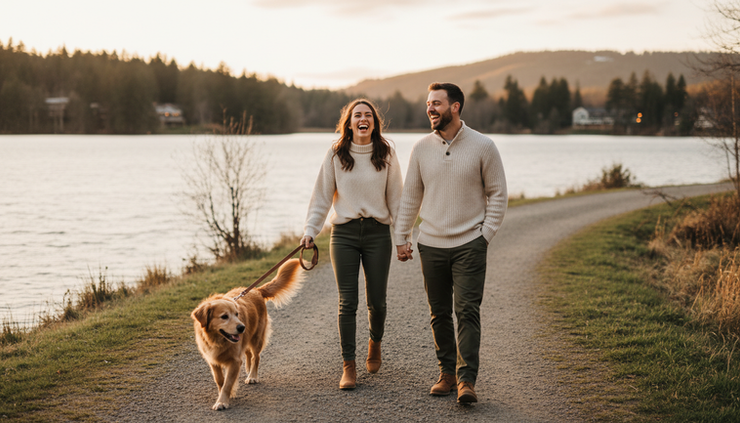
A pet with a simple leash or bandana
A handwritten note or small keepsake
A classic car, motorcycle, canoe, or bike if it fits the location
Signs with wedding dates can work, but they may date the images quickly. If the goal is timeless wall art, keep props subtle.
Pets can be wonderful in engagement photos, but they add unpredictability. Bring treats, water, waste bags, and a helper who can take the pet after their part is done. Start with pet photos early before they get tired or restless.
Prepare for the day of the session
A smooth session starts with simple preparation. Lay out outfits the day before. Try everything on, including shoes and accessories. Check for wrinkles, pet hair, missing buttons, and visible tags.
Eat before the shoot. Bring water. Give yourselves more travel time than needed. Arriving rushed can affect the mood, especially if parking is tricky or the location is unfamiliar.
Make sure phones are charged, but put them away once the session begins. Empty pockets before photos. Phones, keys, and wallets can create awkward bulges in clothing.
If wearing an engagement ring, clean it before the session. A gentle at-home cleaning or a visit to a jeweler can help it sparkle in close-up images. Avoid experimenting with new skincare, tanning products, or haircuts right before the shoot. Last-minute changes can create stress if they do not turn out as expected.
A simple day-of checklist can help:
Confirm time and meeting spot with the photographer
Pack touch-up items
Bring outfit changes in a neat garment bag
Check the weather
Plan parking or transportation
Clean the engagement ring
Remove hair ties from wrists
Empty pockets
Bring water and snacks if needed
Think about how you will use the photos
Engagement photos can do more than mark the season. They can serve practical wedding needs too.
Use them for save-the-dates, invitations, wedding websites, guest books, welcome signs, framed prints, thank-you cards, or home decor. If a specific use matters, tell the photographer before the shoot.
For save-the-dates, wide horizontal images often work well because they leave room for text. For wedding websites, a mix of horizontal and vertical images helps. For frames, classic portraits with clean backgrounds tend to last longer than trendy setups.
Ask for a variety of crops and compositions. Close-ups, wide shots, walking images, seated portraits, and detail photos all add value to the final gallery.
The best galleries include both polished portraits and real moments. One kind gives structure. The other gives feeling.
Enjoy the session instead of performing for it
The most memorable engagement photos come from comfort, not perfection. Wind may move your hair. Shoes may get dusty. A pose may feel silly at first. That is part of the experience.
The goal is not to look like a different couple. The goal is to create images that feel honest, warm, and worth keeping.
Trust the plan, then let go a little. Laugh when something feels awkward. Hold hands between shots. Stay close. Let the photographer guide the technical side while you focus on each other.
An engagement photoshoot is more than a wedding task. It is a chance to slow down and remember what this season is about. With the right location, thoughtful outfits, good light, and a relaxed mindset, the photos will capture more than how everything looked. They will preserve how it felt.


Comments